- For Providers
- For Brokers
Individuals & Families
- Global Individual Health
- Spanish Domestic Individuals
Employers
- SME Employer Health
- Large Corporation Health
- Spanish Domestic Employers
IGO/NGO
- IGO/NGO Health
Individuals & Families
Top Destinations We Cover
Expat Health Insurance
- Inside Expat Health Hub
- Retiree guide to International health Insurance
- A guide to International health Insurance for working abroad
- Expat Health Insurance Explained
- Student guide to International health Insurance
- Moving abroad while pregnant
Choosing Health Insurance
- Travel Insurance vs International Health Insurance
- Choosing Health Insurance
Country Guides
- Country Guides
FAQ
- Frequently Asked Questions
Employers
Member resources
- Useful Documents & Information
- U.S Prescription Drug List
Client
- Employer Log In
IGO/NGO & Government
Government Officials
- Government Officials
Client
- Employer Log In
Topics
Resource Hubs
Individuals & Families
-
Types of Cover
-
Where We Cover
-
Resources
- Inside Expat Health Hub
- Retiree guide to International health Insurance
- A guide to International health Insurance for working abroad
- Expat Health Insurance Explained
- Student guide to International health Insurance
- Moving abroad while pregnant
- Travel Insurance vs International Health Insurance
- Choosing Health Insurance
- Country Guides
- Frequently Asked Questions
-
For Members
Employers
-
Employers
-
For Members
IGO/NGO & Government
Health Blog
For Brokers
How Employers Can Identify and Manage Diabetes Risk Early
How Employers Can Identify and Manage Diabetes Risk Early
Diabetes is often the first visible sign of broader cardiometabolic health risk. By recognising it as an early warning signal, rather than a standalone condition, employers can take a more proactive approach to prevention, protecting workforce health, performance, and long-term costs.
Reviewed by: Dr. Charu Thadani, Head of Clinical, Middle East & Africa
Diabetes is global but often misunderstood and overlooked
Diabetes is one of the fastest-growing global health challenges, yet it’s often misunderstood and addressed as an isolated condition. An estimated 589 million adults (20-79 years) worldwide are living with diabetes, and many remain undiagnosed [1].
Diabetes rarely develops in isolation. It is closely linked to a wider set of interconnected factors, including cardiovascular health, weight, blood sugar regulation and lifestyle behaviours. This interconnected risk, described by Cigna Healthcare as cardiodiabesity, reflects how these conditions are driven by shared underlying factors such as physical inactivity, nutrition, inflammation and stress, and how they evolve together over time.
As a result, diabetes is often identified only once clinical thresholds are reached, even though underlying risk may have been developing silently for years. Earlier stages, including prediabetes, are widespread but frequently missed without proactive screening and awareness.
Taken together, this suggests diabetes is not the starting point of risk, but one of the first visible signs of broader, underlying health decline.
Why early risk is often missed
Prediabetes, a high-risk state where blood sugar levels are elevated but not yet high enough for a Type 2 diabetes diagnosis, is often asymptomatic, meaning many people remain unaware that their risk is increasing.
In practice, the formal diagnosis can lag behind underlying biology—and even abnormal lab results—meaning risk may be present and measurable before it is formally recognised [2]. This creates a gap between when risk begins and when action is taken.
Early intervention is often limited by a combination of factors. Awareness remains low, with many individuals unaware of early-stage risk. Behavioural change can be difficult to sustain, even when risk is understood. And access to screening, support, and follow-up is not always consistent, making early action harder to implement.
As Dr Charu Thadani, Head of Clinical, MEA at Cigna Healthcare International Health, explains:
“Diabetes should prompt earlier action, not just later treatment. For employers, the real value lies in recognising risk sooner and ensuring screening leads to meaningful follow-up support that helps people make lasting health changes.”
Hidden workforce impact
Long before conditions such as diabetes are formally diagnosed, underlying health risk can begin to affect how people feel and perform at work.
Early-stage metabolic risk can reduce energy, concentration, and resilience, often without being linked to a specific condition. Employees may experience fatigue, reduced focus, or increased stress. The Cigna Healthcare International Health study on global well-being shows that 91% of employees with low vitality report experiencing stress, highlighting the close connection between health and performance [3].
For employers, this creates a measurable but often hidden impact. Reduced productivity, presenteeism and absenteeism can significantly affect organisational performance, with health-related productivity losses estimated to cost employers 2–3 times more than direct healthcare expenses [4]. In one employer-sponsored study, employees with Type 2 diabetes had 4.2 additional lost workdays compared to those without diabetes, alongside significantly higher productivity loss [5].
This means workforce performance may already be declining before risks are formally recognised — and before traditional interventions are triggered.
Employer opportunity: enabling early intervention
Addressing health risk earlier represents a more effective and higher-value approach, enabling organisations to reduce long-term risk before it escalates. When action is delayed until diagnosis, interventions are more complex, less effective, and more costly.
This creates a critical gap: the greatest opportunity to influence outcomes is often missed—not because risk is invisible, but because it is not acted on early enough.
Leading organisations are shifting toward more proactive, integrated approaches that help identify and address risk sooner. This includes prioritising early detection, improving understanding of key health indicators, and recognising individuals with risk factors such as raised blood pressure, excess weight or a family history of Type 2 diabetes, who may be at higher risk of progression.
However, identification alone is not enough, value comes from what happens next. Outcomes improve when screening is linked to coordinated care, including access to preventive services, structured lifestyle support, and ongoing monitoring. By connecting screening, support, and follow-up, employers can move beyond fragmented models and create more effective strategies that improve outcomes, while supporting more personalised care and stronger employee engagement.
Employer actions that support early intervention
To translate this approach into practice, employers can:
- Identify risk earlier through regular health screenings, including blood glucose and HbA1c testing — for example, by embedding biometric checks into annual health assessments or workplace wellness programmes
- Act on results quickly by linking screening to clear follow-up support, such as structured lifestyle coaching, nutrition programmes, or diabetes prevention programmes, rather than relying on awareness alone
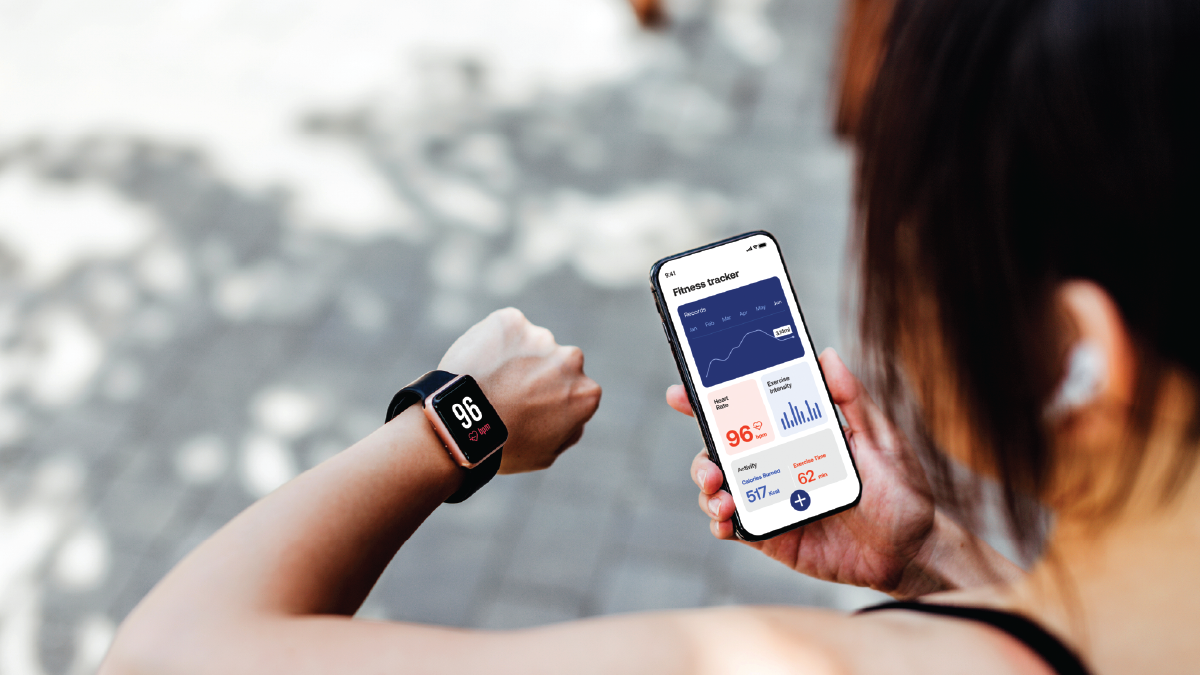
- Reinforce progress through ongoing monitoring, using tools such as digital health platforms, follow-up testing, or wearable devices to help employees track and sustain behaviour change over time
- Improve access to preventative care, by ensuring benefits cover routine check-ups, onsite or virtual screenings, and early interventions — and by reducing practical barriers such as cost, time, and access to providers
- Take a more integrated approach to workforce health, connecting benefits, lifestyle support, and clinical care so that employees experience a single, joined-up pathway rather than separate programmes
From early warning to early action
Cigna Healthcare’s approach reflects this shift: focusing on earlier identification of risk and more coordinated pathways that connect screening, intervention, and ongoing support. For example, in some areas, Cigna Healthcare offers nurse-led clinical programmes for diabetes and cardiovascular conditions, providing one-to-one coaching, education and practical support to help individuals better manage their health and long-term risk.
By enabling earlier action and linking insight to meaningful follow-through, employers can improve outcomes for individuals while reducing long-term health and productivity risk.
Diabetes should not be seen as an endpoint, but as an early signal of broader health risk. Employers who act early are better positioned to support workforce health, sustain performance, and manage long-term costs.
To learn more, explore Cigna Healthcare's global well-being research and insights
Sources
- International Diabetes Federation (2025). Diabetes Facts and Figures show global impact for individuals, families and countries https://idf.org/about%20diabetes/diabetes-facts-figures/
- Nichols GA et al. (2019). Prevalence and predictors of delayed clinical diagnosis of Type 2 diabetes: a longitudinal cohort study. BMJ Open. https://pmc.ncbi.nlm.nih.gov/articles/PMC6481650/
- Cigna Healthcare International Health (2025). Global Well-being & Vitality Study. https://www.cignaglobal.com/global-well-being-and-vitality
- World Health Organization (2023). Diabetes – Key facts. https://www.who.int/news-room/fact-sheets/detail/diabetes
- American Diabetes Association (2022). Productivity Loss and Medical Costs Associated With Type 2 Diabetes Among Employees Aged 18-64 Years With Large Employer-Sponsored Insurance https://pubmed.ncbi.nlm.nih.gov/36048852/
Related articles
© Cigna
This article serves only as a reference and is intended for informational purposes only. Nothing in this article constitutes legal, tax, financial planning, health or medical advice including diagnosis or treatment. Any reference to products or services offered by Cigna are available except where prohibited by applicable law and subject to terms and conditions.
Whether you wish to speak to our sales team or get general help if you are already a Cigna Healthcare® member, we’ll get you to the right information.
Contact Information© Cigna Healthcare. All rights reserved.
*Please note, this is a representation of the benefits available and does not contain the terms, conditions, and exclusions specific to each benefit. The benefits may be subject to change. Some benefits may be part of an optional module. Please see the Customer Guide for full details.
This website is provided by Cigna European Services (UK) Limited, a company incorporated in England and Wales having its registered address at 13th Floor, 5 Aldermanbury Square, London EC2V 7HR and registered number 00199739. The Cigna Healthcare name, logo and other Cigna Healthcare marks are owned by Cigna Intellectual Property, Inc., licensed for use by The Cigna Group and its operating subsidiaries.
Our Policies are underwritten by Cigna Global Insurance Company Limited, a private limited company under Guernsey Law, with registered address office at PO Box 155, Mill Court, La Charroterie, St Peter Port, Guernsey, GY1 4ET, and company number 41925. Cigna Global Insurance Company Limited is authorised and regulated by the Guernsey Financial Services Commission for the conduct of insurance business in Guernsey.
This communication is being issued and/or distributed by Cigna Insurance Management Services (DIFC) Limited which is regulated by the Dubai Financial Services Authority.
Selecting these links will take you away from Cignaglobal.com. Cigna Healthcare does not control the linked sites' content or links.